
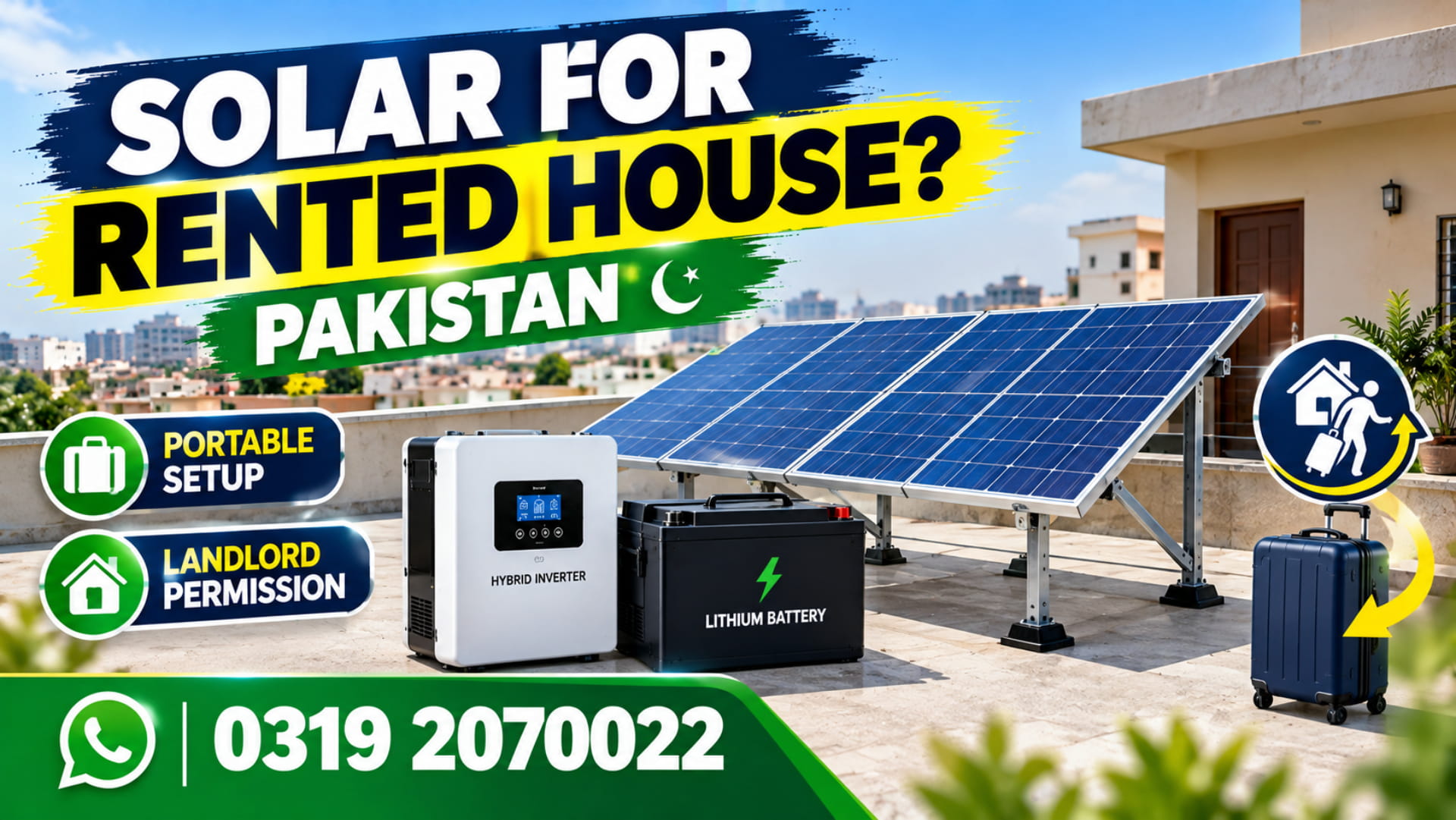
It can be, but only if three things line up: the landlord agrees, the money is split in a way that works for both of you, and the savings repay the cost well before you move out. A tenant who skips any of those three risks paying for a system that ends up on someone else’s roof.
This guide covers the questions in the order you should settle them: permission, who pays, whether the payback fits your tenancy, what the written agreement should say, and what to do if your landlord says no.
Why renting makes solar harder
A homeowner decides, pays and benefits. A tenant usually does only one or two of those.
The roof is not yours. Fixing a structure to a roof involves drilling, sealing and weight. The landlord is exposed to any leak or damage, so the decision is theirs.
The connection is not in your name. The electricity account normally belongs to the landlord or the previous tenant. Grid paperwork, including any net billing application, generally has to come from the connection holder, so check whose name is on the bill before planning anything.
You may leave. Solar pays back over years. If your lease is one year and your payback is three, you have given the landlord a gift.
Someone has to look after it. Panels need washing and the inverter needs checking. A rented house needs clear responsibility for that.
Step 1: Do the payback sum before you ask
Know whether it is worth pursuing before you have the conversation. Start from your average monthly bill over the last twelve months, not your worst summer month.
| Average monthly bill | Indicative system | Approximate installed cost | Indicative payback |
|---|---|---|---|
| Rs 15,000 – 25,000 | 3kW | Rs 380,000 – 520,000 | 3 – 4 years |
| Rs 25,000 – 40,000 | 5kW | Rs 620,000 – 820,000 | 2.5 – 3.5 years |
| Rs 40,000 and above | 5 – 7.5kW | Rs 620,000 – 1,150,000 | 2 – 3 years |
These are rough planning figures. Payback depends on how much of your usage falls in daylight, because under net billing the units you consume yourself are worth your full slab tariff, commonly Rs 40 to Rs 60, while exported units earn only about Rs 8 to Rs 11. A household that runs air conditioning in the afternoon does far better than one that uses most power after dark. How a system ages and how long the components last is covered in our solar panel kitne saal chalta hai guide.
Compare that payback with how long you expect to stay. As a working rule, if the payback is more than about half your realistic tenancy, a permanent system is hard to justify without an agreement that protects your investment. If the lease is long or the landlord will share the cost, the numbers improve quickly.
Step 2: Choose who pays
There are four common arrangements, and each suits different situations.
The landlord pays, the rent goes up. The landlord buys the system, owns it, and charges a higher rent that reflects the saving. The tenant often still comes out ahead if the rent rise is smaller than the bill saving. Example: if solar cuts your bill by Rs 30,000 a month and the rent rises by Rs 15,000, you are Rs 15,000 better off while the landlord adds value to their property.
The tenant pays, with a rent credit. You buy the system and the landlord agrees to a rent reduction or credit until you have recovered the cost. This needs a written schedule.
The cost is shared. Both contribute, and the split reflects who benefits. This works when the lease is medium-length and the landlord wants a modern property.
The tenant pays and owns the system. You buy it, it stays yours, and you take it with you or sell it to the landlord at the end. This is simplest legally, but only practical if the system can be removed without damage, which is covered below.
If your landlord is reluctant, frame it as an upgrade to their asset. A house with solar is easier to let, commands a higher rent and is attractive to tenants who care about electricity bills.
Step 3: Get everything in writing
A conversation is not an agreement. Before any money is spent, put the arrangement on paper and have both parties sign it. A short addendum to the tenancy agreement is enough. It should cover:
- Permission. The landlord consents to the installation on named parts of the property.
- Ownership. Who owns the system during the tenancy and at the end.
- Payment. Who pays what, and when. If a rent credit or reduction applies, the amounts and dates.
- Removal or buyout. If the tenant owns it, can they remove it when leaving, and who repairs the roof afterwards? If they leave early, does the landlord buy it at a depreciated value, and how is that value worked out?
- Damage and restoration. Who repairs leaks, drilling holes and any structural damage, and how it is to be done.
- Maintenance. Who washes the panels, who pays for repairs and who calls the technician.
- Insurance and liability. Who is responsible if the system causes damage.
- Grid paperwork. Who applies, in whose name, and who keeps the documents. If the connection is in the landlord’s name, the landlord needs to be involved in the application.
- Duration and renewal. What happens if the lease is not renewed, or the house is sold.
Keep the invoice, the panel serial numbers and the installer’s details in the same folder. These matter for any warranty claim, and our solar panel warranty claim process in Pakistan guide explains why the paperwork decides whether a claim succeeds. Warranty terms usually attach to the original purchaser, so if the landlord owns the system, make sure they hold the documents.
Step 4: Think about whether the system can leave with you
If you are the owner and you might move, choose a system that is easy to take away.
Use a clamped or ballasted structure rather than one chemically anchored or heavily bolted into the slab. These cause fewer penetrations and are easier to dismantle, though they must still be engineered for wind. Do not trade away safety for portability.
Keep the system modular. Standard panels, a wall-mounted inverter and labelled cabling can be moved. Custom fabrication that only fits one roof cannot.
Label everything. Photograph every connection and mark every cable before removal, so reassembly at the next property is straightforward.
Consider the cost of moving. Removal, transport and reinstallation have a price, and the new property may need a different layout. In many cases it is cheaper to sell the system to the landlord and buy a new one than to carry it with you.
Know what cannot move. Cable runs, conduit, the earthing and any grid agreement stay with the property.
Step 5: Size the system for the tenancy
A system built for a rented house should be sized differently from one built for your own home.
Size to your actual usage, not an optimistic future. Look at your bills and avoid oversizing for a household you may not have in two years.
Prefer on-grid unless outages are severe. An on-grid system costs less and has a faster payback. A hybrid system with a battery gives backup but is a bigger outlay and harder to move. Battery prices vary widely and change quickly, so WhatsApp us now for the latest price of the battery at 03192070022. Ask your installer to compare hybrid and on-grid quotes if backup matters to you.
Keep the cost low enough to recover. A modest 3kW system with a two-year payback is easier to justify than a large one with a four-year payback.
Step 6: Paperwork and net billing
The net billing arrangement for a rented house needs particular attention.
The agreement with the distribution company is tied to the electricity connection, and the application generally comes from the consumer named on it. If the landlord holds the account, they have to apply or authorise the application. If you hold the account, check that the landlord has consented in writing, since you are changing the property.
Because the rules and forms change, ask your distribution company what is required for a tenant or a rented property before you buy. Do not assume the process matches the one for an owner-occupier. Your installer should be able to explain the steps, and you should keep copies of everything submitted.
While approval is pending, a system can often run in self-consumption mode, supplying your own load without exporting. Confirm this with your technician, because it depends on the inverter and the meter.
If the landlord says no
A refusal does not end the conversation. There are other ways to cut your bill.
Reduce your consumption first. Efficient air conditioners, LED lighting, efficient fans and a sensible AC schedule can lower your bill without touching the property. Inverter air conditioners use roughly 0.7 to 0.9 units an hour for a one-ton unit, against 1.3 to 1.5 for a non-inverter unit, which is a large saving on its own.
Use a small, fully portable setup. A modest system for lights, fans and charging, which sits on the ground or a balcony without fixing to the building, may be acceptable to a landlord who objects to roof work. Output is limited, but it needs little or no change to the property and moves with you.
Offer a trial or a guarantee. Offer to restore the roof at your cost, to pay a deposit against damage, or to have the installation inspected by a qualified engineer. Reducing the landlord’s risk often changes the answer.
Wait until your lease renews. A longer lease changes the payback sum and the landlord’s willingness.
Choose your next home with solar in mind. If you are moving anyway, ask about roof access and landlord attitudes before signing. A house with an existing system or a landlord open to one is worth more to you than a slightly cheaper rent.
Avoid these mistakes
Installing without permission. The landlord can demand removal, and you may lose the money.
Paying a large lump sum on a verbal promise. Get the terms written before you pay.
Choosing the cheapest installer. Low-grade panels and poor installation cause leaks and failures, and in a rented property the argument over who is responsible is worse. Ask for panel serial numbers and verify them with the manufacturer before paying.
Ignoring the lease length. If you are leaving in a year, a purchase is almost never right.
Leaving the paperwork until later. Grid approval, serial numbers and invoices are easiest to collect on delivery day.
Getting help through BuySolars
Send us your average bill, the type of house, your lease length and whether the landlord is open to the idea, and we will suggest a system size, payback estimate and the most practical arrangement. If you need to compare financing, our solar loan EMI calculator guide helps you test the repayment against your savings. If you are renting an apartment rather than a house, our solar system for apartment in Pakistan guide covers the roof-rights questions in more detail.
We deliver across Pakistan with nationwide delivery, and current stock is on our products page.
WhatsApp 03192070022 with your bill and lease details for a quote that fits a rented home.
Yes, with the landlord’s written permission, ideally covering ownership and removal.
Longer than the payback, which is often two to four years.
Yes if you own it and it was installed with a removable structure, though moving has a cost.
Not usually. On-grid is cheaper and pays back faster unless outages are severe.