
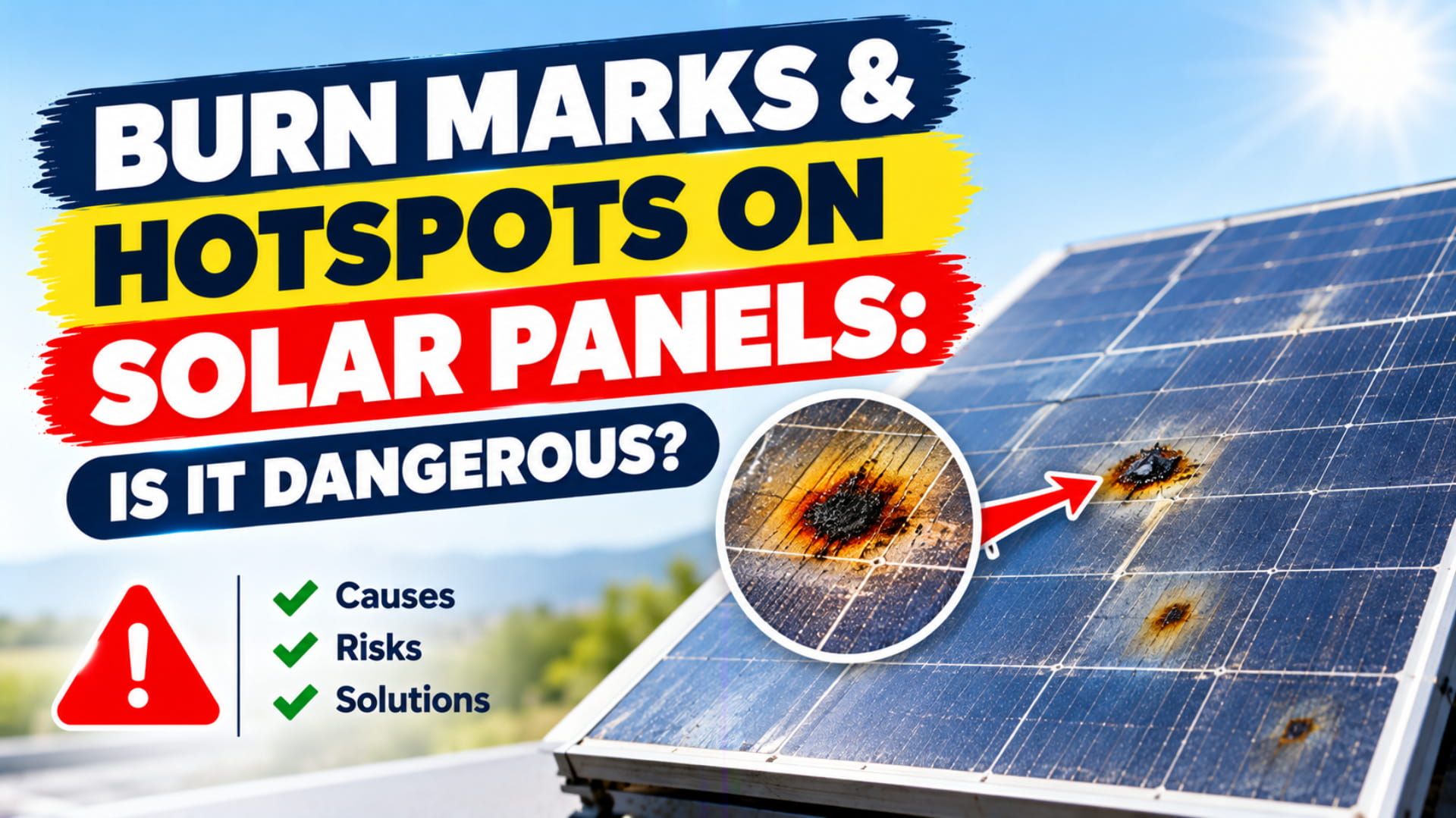
A hotspot is a localized area on a solar panel running significantly hotter than the rest of it, caused by a cell receiving less current than the rest of the string is trying to push through it. That mismatched cell gets forced into reverse bias and starts dissipating power as heat instead of generating electricity, and the longer it continues, the more damage it does to the materials around it. Left unaddressed, a hotspot can discolour the glass, bubble or melt the backsheet, and in less common but genuine cases, start a fire. A visible scorch mark or a bubbled patch on a panel is not cosmetic and should not be left to wait out a warranty period or a convenient weekend.
This guide covers what causes a hotspot, how to tell a genuine one from ordinary ageing, the actual safety risk involved, and what to do about it.
What causes a hotspot
Partial shading is the most common cause by a wide margin. A branch, an antenna, a water tank, a parapet wall, or even a patch of accumulated dirt or bird droppings covering part of a panel forces the shaded cell to carry less current than the unshaded cells in the same string. Because all the cells in a series string are forced to carry the same current, the shaded cell becomes a bottleneck, and the mismatch is dissipated as heat exactly at that cell.
A cracked or microcracked cell behaves the same way as a shaded one. A crack from impact, a hailstone, careless handling during installation, or a manufacturing defect reduces that cell’s current-carrying capacity, and the surrounding healthy cells push current through it anyway, heating it in the same manner shading does.
A manufacturing or soldering defect, more common in lower-tier panels with weaker quality control, can leave a cell or a solder joint with higher-than-normal resistance from day one, meaning a hotspot can appear even on a panel that has never been shaded or physically damaged.
A failed bypass diode is often what turns an ordinary weak cell into a severe hotspot rather than a minor one, covered next.
How bypass diodes are supposed to prevent this
Every solar panel contains a small number of bypass diodes, each one covering a group of cells. Their job is simple: if a cell in that group is underperforming, whether from shade, damage or a defect, the bypass diode should route current around that entire group instead of forcing it through the weak cell. A healthy bypass diode turns a shading event into a modest, temporary output dip rather than a heat problem.
When a bypass diode has failed, whether from age, a manufacturing fault, or being overwhelmed by a severe and prolonged mismatch, that protection is gone, and the weak cell is left to absorb the full stress of the mismatch on its own. This is one reason two visually similar panels, one from a reputable tier-1 manufacturer and one from a lower-tier source, can respond very differently to the same patch of shade.
Warning signs to look for
Visual signs. A brown, black or rainbow-tinted discoloured patch on the glass or backsheet, a bubbled or warped section of the backsheet, visible melting or distortion of the plastic frame or junction box, or an actual scorch mark are all signs worth acting on immediately rather than monitoring.
Output signs. A sudden, isolated drop in output from one string while neighbouring strings remain normal points toward a specific panel or cell rather than a system-wide issue like dust or seasonal variation, which our why is my solar production dropping guide covers for the broader range of causes.
Thermal signs. A panel that feels noticeably hotter at one specific spot compared to the rest of its surface, checked carefully and without touching a panel that already shows visible damage, suggests a hotspot developing beneath the surface even before discolouration becomes visible.
Is it actually dangerous?
Yes, genuinely, though it is not an everyday occurrence. The fire risk from an advanced hotspot is real, documented in solar installations worldwide, and is the reason manufacturers build bypass diodes and quality control into panel design in the first place. Most hotspots are caught and addressed well before they reach that stage, but a panel already showing melted plastic, a scorch mark, or a smell of burning is past the stage of being a minor concern.
If you see any of the following, isolate the affected panel or string immediately at the DC isolator and do not wait for a scheduled inspection: visible melting of the frame or junction box, an active scorch mark, bubbling that has clearly expanded since you last looked, or any smell of burning near the array. Continuing to operate a panel in that state in the hope it resolves itself is not a reasonable gamble.
What to do about it
Identify the affected panel precisely rather than assuming the whole array or string is at fault, since a hotspot is almost always confined to a single panel or even a single cell group within it.
Check for an obvious shading source first. A tree branch that has grown into the array’s path, an antenna or satellite dish casting a new shadow, or a build-up of dirt or droppings concentrated on one area are all fixable without replacing anything. Removing the shading source and monitoring the panel for a few days is a reasonable first step if the damage is still mild, discolouration only, with no melting or bubbling.
If shading is not the cause, or damage is already visible beyond mild discolouration, isolate the panel and arrange a technician visit. A thermal imaging camera can confirm exactly which cell or cells are running hot and distinguish a hotspot from other causes of reduced output.
Replace rather than repair the affected panel. A cell-level defect or a failed bypass diode inside a sealed laminate is not something to open and fix in the field. If the panel is within its product warranty, which our solar panel warranty claim process in Pakistan guide explains how to pursue, a genuine manufacturing-related hotspot is often a valid claim, provided the panel’s serial number and purchase documentation are on hand.
Never attempt a do-it-yourself repair of the panel laminate itself. A damaged panel’s internal layers are sealed for a reason, and reopening one is both unsafe and voids any remaining warranty regardless of outcome.
Preventing hotspots from developing
Choose tier-1 panels with reliable bypass diodes and documented quality control. The practical differences between higher and lower tier modules, including the quality consistency that affects exactly this kind of defect, are covered in our A-grade vs B-grade solar panels guide, and verifying a panel’s authenticity before installation is covered in our how to spot fake solar panels guide.
Design the installation to avoid partial shading from the outset. Trees, antennas, parapet walls, chimneys and water tanks should all be accounted for at the design stage, not discovered as a problem after shadows shift with the seasons. Correct layout planning is one of the details that separates a properly engineered installation from one assembled without this kind of forethought, covered more broadly in our solar panel installation in Karachi guide.
Keep panels clean, evenly. A build-up of dirt or droppings concentrated unevenly across a panel’s surface can create the same partial-shading effect as a physical obstruction, which is one more reason regular, even cleaning matters beyond simple output loss.
Inspect periodically, and consider thermal imaging on larger systems. A commercial-scale installation benefits from an occasional thermal scan as part of routine maintenance, catching a developing hotspot well before it becomes visible to the naked eye.
Telling a genuine hotspot apart from normal ageing
Not every mark on an older panel is a hotspot. Panels naturally develop a very slight, even discolouration over many years of UV exposure, a uniform, gradual change across the whole surface rather than a sudden, localized dark patch. A genuine hotspot is sudden, confined to a specific area, and usually accompanied by the output drop or physical deformation described above. If you are unsure whether what you are seeing is ordinary ageing or a developing hotspot, a side-by-side comparison with an unaffected panel of the same age in the same array is usually the clearest way to tell the difference.
Why summer heat makes this worse
Karachi’s summer ambient temperatures already push panels toward the upper end of their normal operating range, and a cell already stressed by shading or a defect runs considerably hotter again when the surrounding panel surface itself starts from a higher baseline temperature. A mild hotspot that produces only slight discolouration in cooler months can progress faster and more visibly during the hottest stretch of the year, which is worth keeping in mind if you noticed something borderline during winter and deferred a closer look. If anything flagged earlier in this guide was left unresolved, treat the approach of peak summer as a reason to recheck it rather than wait further.
A worked example
A homeowner notices one panel in their array producing noticeably less than its neighbours, and on closer inspection finds a dark, slightly raised patch near one corner of the panel, roughly the size of a coin. There is no visible shading source nearby, no tree, antenna or tank casting a shadow on that spot. A technician’s thermal scan confirms the patch runs considerably hotter than the surrounding cells, consistent with either a manufacturing defect or a failed bypass diode rather than shading. Because the panel is still within its product warranty period and the serial number matches the original purchase documentation, the manufacturer replaces it at no cost, and the new panel is installed with no further issue.
Getting help through BuySolars
If you notice discolouration, bubbling, a scorch mark or an isolated output drop on any panel, send us photos, the panel’s serial number if visible, and when the system was installed, and we can help you work out whether it needs a technician visit or a warranty claim. We supply Tier-1 panels with documented quality control and nationwide delivery, and current stock is on our products page.
WhatsApp 03192070022 with photos of the affected panel for a quick assessment.
Most commonly partial shading, a cracked or defective cell, or a failed bypass diode forcing a weak cell to absorb excess current as heat.
Yes, in advanced cases it carries a genuine fire risk, though most hotspots are caught before reaching that stage.
No. Isolate the affected panel or string and arrange an inspection rather than continuing to operate it.
The panel needs replacing. The internal cell and diode layers are sealed and not a field-repairable component.
Often yes, if it stems from a manufacturing defect rather than external damage or shading you could have prevented. Keep your serial number and purchase documents on hand.